The Genius Wave
The Genius Wave is a 7-minute audio program designed to support focus, clarity, and calm thinking using brainwave-based sound technology.
The Genius Wave
The Genius Wave is a 7-minute audio program designed to support focus, clarity, and calm thinking using brainwave-based sound technology.

“I’ve dealt with a restless mind for as long as I can remember. Even when things were going well, my head never really switched off—constantly jumping from one thought to another. I tried meditation apps, breathing techniques, even journaling… nothing stuck. With The Genius Wave, I didn’t have to try so hard. I just listened. The first few days felt subtle, but by the second week, I noticed I wasn’t overthinking everything anymore. I could sit, focus, and actually finish what I started. It’s not dramatic or flashy—it just quietly gave me control back. That alone means a lot to me.”

“For years, I felt like I had lost my creative edge. I’m a designer, and there was a time ideas came naturally—but somewhere along the way, that stopped. Everything started to feel forced. I picked up The Genius Wave out of curiosity, not expectation. What surprised me was how quickly my mind started to ‘open up’ again. Not in a strange way—just clearer, less cluttered. Ideas started coming back during and after sessions, almost like I had space to think again. I won’t say it made me a genius overnight, but it definitely helped me reconnect with a part of my brain I thought was gone.”

“I used to wake up already feeling mentally tired. No matter how much I slept, I never felt sharp during the day. It started affecting my work and even how I talked to people—I was slower, distracted, and honestly a bit frustrated with myself. I started using The Genius Wave without expecting much, but I stuck with it daily. Around the 10-day mark, something shifted. Mornings felt lighter, and I wasn’t dragging through conversations or tasks anymore. My thinking felt… cleaner, if that makes sense. I still have busy days, but I handle them better now. I’m genuinely grateful I gave this a chance.”
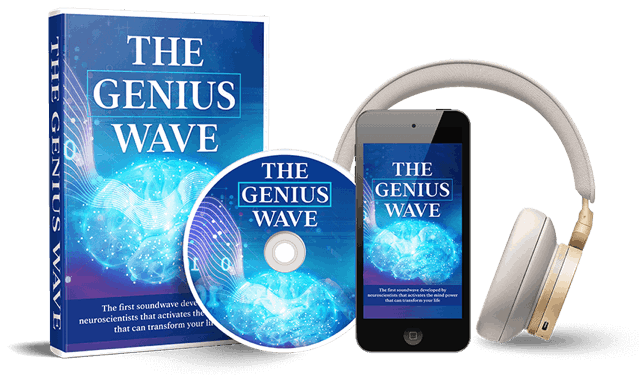
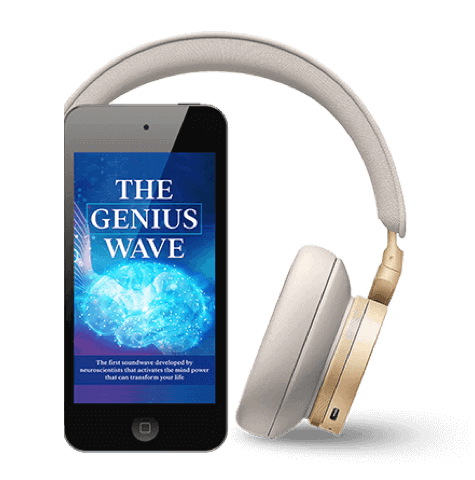
The Genius Wave is a short, audio-based brain training program built around one idea: your mental state can be nudged by sound. It’s not a course, not an app packed with lessons—just a focused listening experience designed to shift your brain into a calmer, more receptive mode within minutes. You press play, put on headphones, and let the audio do its thing.
At the center of it is something called theta brainwave activity. This is the same range your mind tends to drift into when you’re deeply relaxed, daydreaming, or just on the edge of sleep—ironically, also when some of your best ideas show up. The Genius Wave tries to guide you into that state on demand using a mix of isochronic tones and binaural beats—two sound techniques that subtly influence how your brain processes rhythm and frequency.
What makes it stand out isn’t just the concept, but the compression. Traditional methods that aim for similar mental states—like meditation or breathwork—usually take time to learn and even longer to master. This program skips the learning curve entirely. The audio is pre-engineered to do the heavy lifting, which is why sessions are intentionally short—around 7 to 12 minutes depending on the version.
It’s also fully digital, which sounds like a small detail but matters more than you’d think. There’s no setup, no device syncing, no routine overhaul. You can listen from your phone, laptop, or tablet, whether you’re starting your day or winding it down. That simplicity is part of the design—reduce friction so you actually use it consistently.
The Genius Wave is attributed to Dr. James Rivers, who is presented as a neuroscientist with decades of experience studying how the brain responds to sound and frequency. According to available information, his work focuses on brainwave activity—especially how specific patterns like theta waves influence creativity, focus, and mental clarity. What stands out here isn’t just the title “neuroscientist,” but the direction of his research: simplifying complex brain science into something people can actually use in daily life.
His background is often described as a mix of academic training and practical work with high-performance individuals—ranging from professionals to athletes and executives. Some sources also connect his research exposure to environments linked with advanced scientific study, including collaborations inspired by NASA-related work. Whether you take every claim at face value or not, the central idea is clear: the program is framed as the result of long-term experimentation with brainwave entrainment, not something put together overnight.
What’s more interesting is why The Genius Wave was created in the first place. Instead of building another complex system that requires training or discipline, the goal appears to have been compression—taking techniques that usually take time (like meditation or guided brain training) and reducing them into a short, repeatable audio experience. In simple terms, it’s positioned as a shortcut to a mental state that typically takes effort to reach, designed for people who want something practical rather than theoretical.
The idea sounds bigger than it is. Soundwaves don’t “unlock genius” in a mystical sense—they influence how your brain organizes itself in the moment. When you listen to structured audio patterns, especially rhythmic pulses, your brain starts to follow that rhythm. It’s a natural response called entrainment. You’ve probably felt a mild version of this when music changes your mood without you trying. The Genius Wave uses that same mechanism, just in a more controlled and intentional way.
What actually shifts is your mental state. The audio is designed to nudge your brain toward a slower, steadier pattern—commonly linked with relaxed focus. In that state, the usual mental clutter (overthinking, distractions, internal noise) tends to quiet down a bit. And when that noise drops, something interesting happens: your thinking feels smoother. Ideas connect faster, decisions feel less forced, and you’re not constantly fighting your own attention. That’s what people often describe as being “in the zone”—not smarter, just less blocked.
The important part is that nothing is being added to your brain. No new skill, no external boost—just better conditions for what’s already there. Think of it like clearing fog from a windshield. The road was always in front of you; you just couldn’t see it clearly. Soundwaves, when used this way, don’t do the driving—they just improve visibility. Over time, as your brain gets used to entering this clearer state, it becomes easier to access it even without the audio. That’s where the real value shows up.
Extremely easy to use (no learning curve): You don’t need to study anything, practice techniques, or change your routine. You just listen. That simplicity is rare in this space—and it’s probably why people stick with it longer than meditation apps or structured programs.
Time-efficient by design: A full session takes only a few minutes. That matters more than it sounds. Most people don’t quit self-improvement tools because they don’t work—they quit because they take too long.The most practical advantage here is consistency becomes realistic.
Helps reduce mental clutter, not just “add focus”: A lot of tools try to boost productivity directly. This one works differently—it clears interference first. When your mind is less noisy, focus happens more naturally instead of feeling forced.
No dependency on motivation or discipline: On low-energy days, you can still use it. There’s no “effort barrier” like journaling, affirmations, or deep meditation. You don’t have to feel motivated—you just press play.
Portable and private: Since it’s a digital audio, you can use it anywhere without drawing attention. No equipment, no setup, no schedule pressure. That flexibility makes it easier to integrate into real life, not just ideal routines.
Results are subtle, not dramatic: If you’re expecting a sudden transformation or instant “mental upgrade,” this will probably disappoint you. The changes tend to be gradual—clearer thinking, calmer focus—not something flashy or immediate.
Requires consistency to notice real impact: One or two sessions won’t tell you much. The benefit builds with repetition.The trade-off is simple: low effort per session, but you need to show up regularly.
Not a solution for deeper cognitive or mental health issues: This isn’t therapy, medical treatment, or a fix for serious conditions like anxiety disorders or attention disorders. It can support a better mental state, but it shouldn’t replace professional help where it’s needed.
The Genius Wave comes with a 90-day money-back guarantee, which is straightforward and actually useful if you’re unsure about trying it. You get full access to the program, use it consistently, and if you don’t feel it’s helping—or it simply doesn’t click for you—you can request a refund within that period. There’s no need to justify your decision or jump through complicated steps. The practical takeaway is simple: you have enough time to test it properly in real conditions, not just a few days of guessing.

The Genius Wave makes the most sense for people who feel mentally “busy” all the time. If your attention drifts, you overthink simple decisions, or you struggle to stay with one task without checking your phone or jumping to something else—this is the kind of problem it’s designed around. It’s not about boosting intelligence; it’s about reducing the friction that makes thinking feel harder than it should.
It’s also a practical fit for people who rely on their mind for output—creatives, freelancers, students, or anyone solving problems daily. When your work depends on ideas, clarity, or communication, even a small improvement in how your mind organizes thoughts can make a noticeable difference. The shift here isn’t dramatic inspiration—it’s fewer mental blocks and more consistent flow.
At the same time, it’s useful for people who’ve tried traditional methods and didn’t stick with them. Meditation, journaling, and focus techniques work—but they require effort, patience, and discipline. Not everyone has the time or mindset for that. The Genius Wave is better suited for those who want a low-effort entry point—something they can actually use daily without turning it into another task to manage.
Most people don’t notice anything dramatic on day one—and that’s actually normal. Some users report subtle shifts (like feeling calmer or slightly clearer) within the first few sessions, while more noticeable changes tend to build over 1–3 weeks of consistent use.
Yes, and this part isn’t optional if you want the full effect. The audio relies on delivering slightly different frequencies to each ear (that’s how binaural beats work), and speakers simply can’t do that properly.
For most healthy adults, it’s considered low-risk because it’s just sound—no chemicals, no stimulation devices, nothing invasive.
You can, but more isn’t always better. These types of audio programs are typically designed for short, controlled sessions. Overusing them may lead to mild discomfort like fatigue or mental overstimulation in some people.
There’s usually a refund policy attached (often around 60–90 days depending on where you buy it). So if you try it consistently and don’t feel any meaningful difference, you can request your money back.
No ongoing subscription is typically required. It’s usually sold as a one-time purchase that gives you lifetime access to the audio.
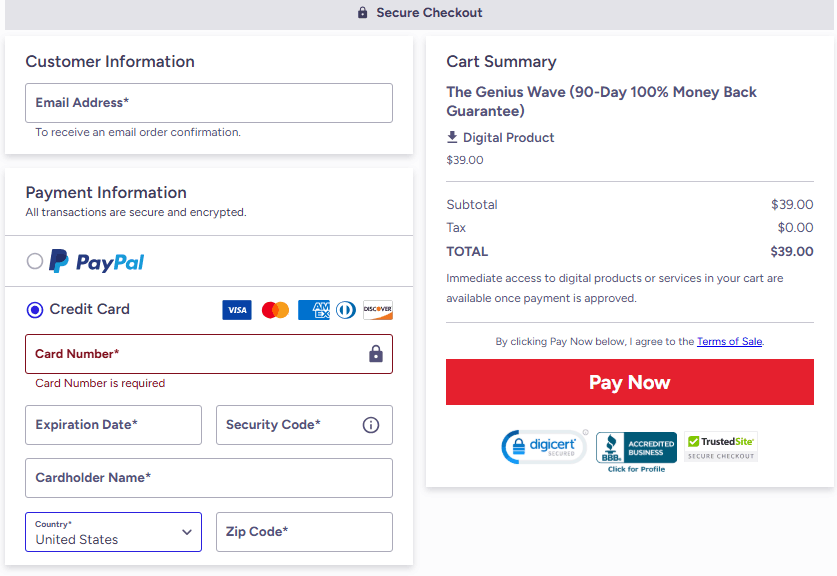
Your credit card information is completely safe when you purchase The Genius Wave. The checkout process is protected by advanced SSL encryption, the same security technology used by major banks and trusted e-commerce platforms. This ensures that your personal and payment details are fully encrypted and cannot be accessed by unauthorized parties.
In addition, all transactions are processed through secure third-party payment gateways, meaning your financial information is never stored on our servers. This adds an extra layer of safety and keeps your data fully protected.
You can confidently place your order knowing your privacy, identity, and payment information are handled with the highest level of security.
The Genius Wave
The Genius Wave